
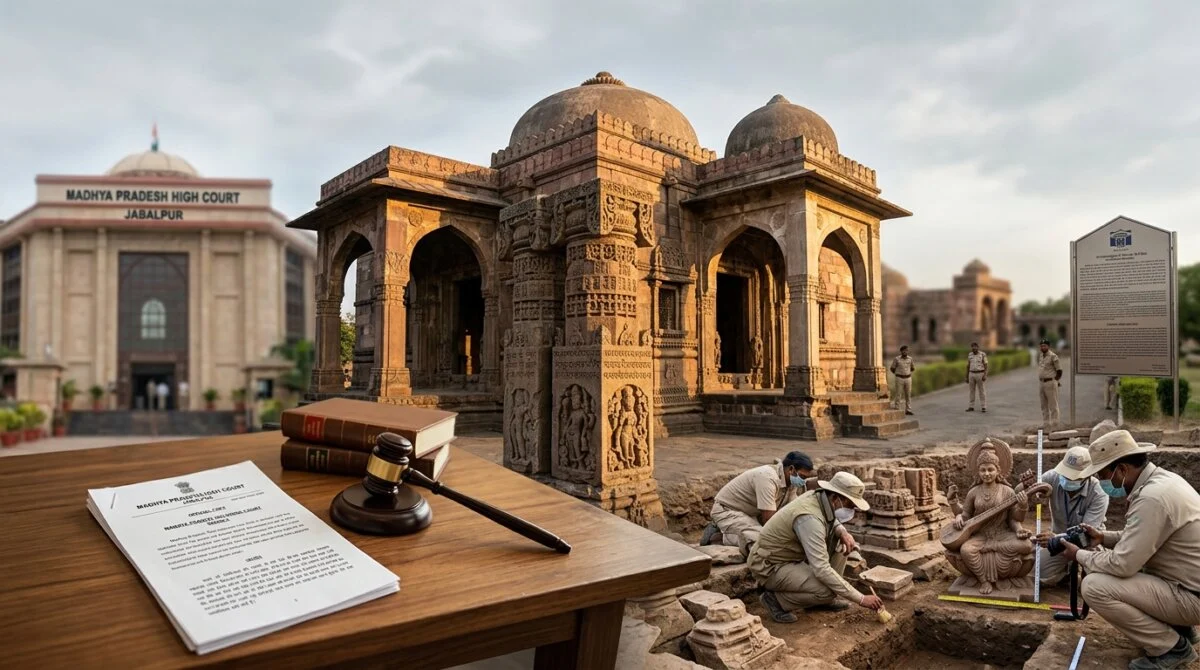
Bhojshala Complex Temple Verdict: Madhya Pradesh High Court ने एक ऐतिहासिक फैसला सुनाते हुए धार जिले के विवादित Bhojshala Complex को हिंदू मंदिर घोषित कर दिया है। इस निर्णय को “Ayodhya Verdict 2.0” की संज्ञा दी जा रही है क्योंकि यह भी archaeological evidence और historical continuity पर आधारित है। Court ने स्पष्ट किया कि यह structure fundamentally एक Hindu temple है जो Goddess Saraswati को समर्पित था और एक Sanskrit learning center के रूप में कार्य करता था।
दिलचस्प बात यह है कि Court ने Archaeological Survey of India (ASI) के 2003 के उस आदेश को भी invalid करार दिया है जो Muslims को Friday को नमाज पढ़ने की अनुमति देता था। साथ ही Muslims को alternative land दिए जाने का निर्देश भी दिया गया है – बिल्कुल वैसे ही जैसे Ayodhya case में हुआ था।
Bhojshala क्या है और कहां स्थित है
Bhojshala एक medieval monument है जो मध्य प्रदेश के Dhar district में स्थित है। Indore के बिल्कुल बगल में स्थित यह जिला ऐतिहासिक रूप से बेहद महत्वपूर्ण रहा है। यह complex सदियों से विवाद का केंद्र रहा है।
दोनों पक्षों के दावे:
- Hindu claim: यह प्राचीन Saraswati Temple था और यहां Sanskrit University संचालित होती थी
- Muslim claim: यह Kamal Maula Masjid है जहां लंबे समय से नमाज अदा की जाती रही है
- Jain groups: कुछ Jain समूह भी claim करते हैं कि यहां Jain worship traditions थीं
समझने वाली बात यह है कि पूरा विवाद इस structure की original nature को लेकर है – यह originally क्या था? क्या यह Hindu temple था जिसमें बाद में Islamic modifications किए गए? और legal status क्या होनी चाहिए?
High Court का फैसला: मुख्य बिंदु
Madhya Pradesh High Court ने अपने judgment में स्पष्ट रूप से कहा है:
- यह fundamentally एक Hindu Temple है जो Goddess Saraswati (Vag Devi) को समर्पित है
- Site का religious character वही है जो Bhojshala Temple का था
- ASI का 2003 का order invalid है जो Muslims को Friday को नमाज की अनुमति देता था
- Muslims को alternative land दी जा सकती है
यह फैसला मुख्य रूप से archaeological evidence, historical continuity और ASI की findings पर आधारित है।
Raja Bhoj और Bhojshala का इतिहास
अगर गौर करें तो Bhojshala का origin Raja Bhoj से जुड़ा है, जो medieval India के सबसे celebrated scholar-kings में से एक थे। वे 11th century में Malwa Plateau पर शासन करते थे।
Parmar Dynasty के इस महान राजा का काल Central India के लिए स्वर्णिम युग था। वे Sanskrit scholarship, temple building, literature और philosophy के लिए प्रसिद्ध थे। Raja Bhoj ने Dhar को एक cultural capital और Sanskrit learning center के रूप में transform कर दिया था।
“Bhojshala” शब्द का अर्थ:
“Bhojshala” का अर्थ होता है – “School/Institution of Bhoj” यानी Raja Bhoj का educational institution।
Bhojshala: एक Sanskrit University
यहां ध्यान देने वाली बात यह है कि historical traditions में Bhojshala को एक Sanskrit University के रूप में describe किया गया है। यह:
- Goddess Saraswati को समर्पित temple था
- Grammar, philosophy और Sanskrit learning का center था
- विद्वानों और students का प्रमुख केंद्र था
| Aspect | Details |
|---|---|
| Founded by | Raja Bhoj (11th century) |
| Dynasty | Parmar Dynasty |
| Location | Dhar, Madhya Pradesh (Malwa Plateau) |
| Original Purpose | Sanskrit University, Saraswati Temple |
| Architectural Style | Hindu temple architecture |
| Historical Significance | Major intellectual hub of Central India |
Medieval Islamic Transformation: क्या हुआ था
फिर आगे चलकर जब Delhi Sultanate का influence Central India में बढ़ा, तो Bhojshala के कुछ sections में changes किए गए।




क्या किया गया:
- Temple के कुछ हिस्सों को alter किया गया
- Temple components का ही reuse करके Islamic architectural elements जोड़े गए
- Islamic arches बनाए गए
- Prayer halls में conversion किया गया
- पास में Sufi saint Kamal Maula से related एक tomb भी बनी
इससे complex की dual identity बन गई – एक तरफ temple heritage, दूसरी तरफ mosque usage।
लेकिन चिंता का विषय यह है कि High Court ने अपने judgment में स्पष्ट किया कि बाद के modifications ने structure के original religious character को पूरी तरह से हटाया नहीं है। यानी यह मूल रूप से temple ही था।
Archaeological Evidence की Crucial भूमिका
पूरा case archaeological evidence पर टिका है। Court ने निम्नलिखित factors पर विचार किया:
ASI Survey में क्या मिला:
- Temple-style carvings: Pillars पर Hindu motifs
- Sanskrit inscriptions: जो Saraswati worship से related हैं
- Architectural patterns: जो temple architecture से match करते हैं
- Temple pillars: जो mosque के अंदर reuse किए गए थे
- Pre-existing large non-Islamic structure के evidence
ASI ने 2024 में एक comprehensive survey किया जिसमें:
- 98 दिन लगे
- 2000+ pages की findings
- Excavation, ground studies, structural analysis
- Inscription studies और detailed mapping
British Period: Saraswati Idol की कहानी
Colonial rule के दौरान British archaeologists ने site को document किया और Hindu iconography को record किया। यहीं से debate intensify होने लगी।
सबसे बड़ी बात: यहां से Saraswati की मूर्ति बरामद हुई जो Bhojshala से ही related थी। लेकिन British ने इसे ले जाकर Britain भेज दिया – जैसा कि वे अक्सर valuable artifacts के साथ करते थे।
यह idol का मिलना एक major emotional issue बन गया और Hindu claims को मजबूती दी।
Independence के बाद: ASI Control और 2003 Arrangement
Independence के बाद site ASI के control में आ गई। दोनों communities – Hindus और Muslims – ने claim करना शुरू किया।
2003 का Compromise Arrangement:
ASI ने एक controversial arrangement किया:
- Hindus: Tuesday को worship कर सकते हैं
- Muslims: Friday को नमाज पढ़ सकते हैं
यह arrangement कथित रूप से “communal peace” maintain करने के लिए किया गया था। लेकिन दोनों communities इससे संतुष्ट नहीं थीं – दोनों पूर्ण अधिकार चाहते थे।
दोनों पक्षों के Arguments
Hindu Petitioners का पक्ष:
- ASI की कोई authority नहीं बनती prayer-sharing arrangement करने की
- Archaeological evidence clearly temple origin दिखाता है
- Mosque का status historically कमजोर है
- Hindu worship हमेशा से exist करती आई है
- Saraswati Temple की identity historically survive करती रही है
Muslim Organizations का पक्ष:
- हमारा भी लंबा इतिहास है, लंबे समय से नमाज अदा करते आए हैं
- 2003 का shared arrangement harmony maintain कर रहा था, उसे जानबूझकर तोड़ा जा रहा है
- Mosque के rights को simply नहीं हटाया जा सकता
- Places of Worship Act 1991 का हवाला – जो कहता है कि 1947 में जो character था वही maintain रहेगा
Places of Worship Act 1991: एक महत्वपूर्ण कानून
Places of Worship (Special Provisions) Act, 1991 एक बेहद महत्वपूर्ण कानून है जो कहता है कि किसी भी religious place का वही character बना रहेगा जो 15 August 1947 को था।
Muslim organizations इसी Act का हवाला देती हैं। लेकिन इस Act में Ayodhya को exception दिया गया था, और अब courts अन्य sites के cases में भी archaeological evidence को महत्व दे रहे हैं।
2024 का Scientific ASI Survey: Game Changer
March 2024 में High Court ने scientific ASI survey का आदेश दिया। यह survey लगभग 98 दिन चला और इसमें:
- Excavation
- Ground studies
- Structural analysis
- Inscription studies
- Detailed mapping
ASI Report की Main Findings:
| Finding | Details |
|---|---|
| Pre-existing structure | एक बड़ा temple-like structure mosque से पहले exist करता था |
| Reused components | Current structure temple components से बना है |
| Sculptural remains | Hindu religious site को indicate करते हैं |
| Sanskrit inscriptions | Saraswati worship से related हैं |
| Archaeological evidence | Non-Islamic origin को suggest करता है |
| Temple pillars | Mosque के अंदर reuse किए गए |
Court का Legal Reasoning
High Court ने अपने फैसले में निम्नलिखित पर rely किया:
- Archaeological Evidence: ASI की detailed findings
- Constitutional Rights: Articles 25 और 26 (धार्मिक स्वतंत्रता)
- Historical Continuity: Hindu worship की continuous tradition
- Ayodhya Precedent: Supreme Court के Ayodhya judgment का pattern
Court ने माना कि archaeological evidence और historical facts यह साबित करते हैं कि यह originally Saraswati Temple और Sanskrit learning center था।
Ayodhya Verdict 2.0 क्यों कहा जा रहा है
सवाल उठता है – इसे Ayodhya Verdict 2.0 क्यों कहा जा रहा है?
समानताएं:
- दोनों में archaeological survey crucial था
- दोनों में ASI की findings को महत्व दिया गया
- दोनों में losing party को alternative land देने का निर्देश
- दोनों में original structure के temple होने को माना गया
- दोनों में historical और religious continuity पर focus
लेकिन यहां ध्यान देने वाली बात यह है कि Ayodhya case Supreme Court में गया था, जबकि Bhojshala अभी High Court level पर है। Muslim organizations इसे Supreme Court में challenge कर सकते हैं।
Muslim Organizations की आपत्तियां
Muslim organizations इस judgment से बिल्कुल खुश नहीं हैं। उनके concerns:
- Insecurity बढ़ेगी: इस तरह के judgments से minority communities में insecurity बढ़ती है
- Archaeology over Worship Traditions: Archaeological evidence को worship traditions पर priority देना गलत है
- Ayodhya Model का विस्तार: Ayodhya को अन्य sites पर expand किया जा रहा है
- ASI Report Biased: Report जानबूझकर Hindu claims को favor करती है
- Religious Majoritarianism: देश में majority community के favor में फैसले हो रहे हैं
कुछ groups का concern है कि अब Gyanvapi Mosque, Mathura के Shahi Idgah, Qutub Minar Complex जैसे अन्य विवादित स्थलों पर भी ऐसे ही cases बढ़ेंगे।
क्या होगा अब: What Next
Immediate Impact:
- Bhojshala में अब सिर्फ Hindu worship होगी
- Muslims को alternative land दी जाएगी
- ASI नई management guidelines जारी करेगी
Possible Appeals:
- Muslim organizations Supreme Court जा सकती हैं
- Legal battle लंबी चल सकती है
- Constitutional validity पर debate होगी
Wider Implications:
यह judgment अन्य pending disputes को भी impact कर सकता है:
- Gyanvapi Mosque (Varanasi)
- Shahi Idgah (Mathura)
- Qutub Complex claims
- अन्य disputed religious sites
दो विपरीत Viewpoints
देखा जाए तो इस पूरे मुद्दे पर दो बिल्कुल अलग viewpoints हैं:
Viewpoint 1: Historical Wrongs को Correct करना जरूरी
- Medieval period में जो Hindu religious sites को तोड़ा/convert किया गया, उसे ठीक करना चाहिए
- Archaeological evidence को priority मिलनी चाहिए
- Historical injustice को rectify करना legitimate है
- यह restoration है, न कि revenge
Viewpoint 2: Modern India को आगे बढ़ना चाहिए
- हम कब तक history में जाते रहेंगे?
- जो हो चुका है, उसे accept करके आगे बढ़ना चाहिए
- ऐसे disputes से communal harmony disturb होती है
- Development पर focus करना चाहिए, past grievances पर नहीं
दोनों viewpoints में merit है, और यह debate आने वाले समय में भी जारी रहेगी।
Legal और Social Balance की चुनौती
चिंता का विषय यह है कि courts के सामने एक बड़ी चुनौती है – कैसे historical facts, archaeological evidence, constitutional rights और social harmony को balance करें।
एक तरफ:
- Archaeological evidence को ignore नहीं किया जा सकता
- Historical facts महत्वपूर्ण हैं
- धार्मिक भावनाओं का सम्मान जरूरी है
दूसरी तरफ:
- Communal peace भी उतनी ही जरूरी है
- Minority rights का संरक्षण constitutional duty है
- Social fabric को damage नहीं होना चाहिए
ASI की भूमिका: Neutral या Biased?
ASI की भूमिका पर भी debate है। Hindu side मानता है कि ASI ने scientific और objective survey किया है। Muslim side का आरोप है कि ASI deliberately Hindu claims को favor करता है।
राहत की बात यह है कि ASI एक government body है और उसकी methodology generally scientific मानी जाती है। लेकिन interpretations पर हमेशा debate हो सकती है।
आगे का रास्ता
दिलचस्प बात यह है कि यह judgment एक नया chapter खोलता है। Supreme Court में इसका क्या होगा, यह देखना होगा। Places of Worship Act की constitutional validity पर भी बड़ी debate हो सकती है।
हो सकता है कि आने वाले समय में:
- Supreme Court एक comprehensive framework दे
- Religious disputes के लिए clear guidelines बनें
- Archaeological methodology को standardize किया जाए
- Alternative dispute resolution mechanisms develop हों
मुख्य बातें (Key Points)
- Madhya Pradesh High Court ने Bhojshala Complex को Hindu Temple घोषित किया, Goddess Saraswati को समर्पित
- यह Raja Bhoj (11th century) के समय का Sanskrit University और Saraswati Temple था
- Court ने ASI के 2003 के order को invalid किया जो Muslims को Friday नमाज की अनुमति देता था
- Muslims को alternative land दिए जाने का निर्देश – Ayodhya verdict की तरह
- ASI survey (2024): 98 दिन, 2000+ pages report – temple origin के strong evidence
- Archaeological findings: Temple pillars, Sanskrit inscriptions, Hindu sculptures, pre-existing non-Islamic structure
- Saraswati idol यहां से मिली थी जो British ले गए
- Dual identity: Medieval period से temple heritage + mosque usage
- Muslim organizations को चिंता कि Gyanvapi, Mathura जैसे अन्य disputes भी प्रभावित होंगे
- Places of Worship Act 1991 की applicability पर debate
- Supreme Court में appeal संभव
ताज़ा खबरों के लिए हमसे जुड़ें